
Online Therapy
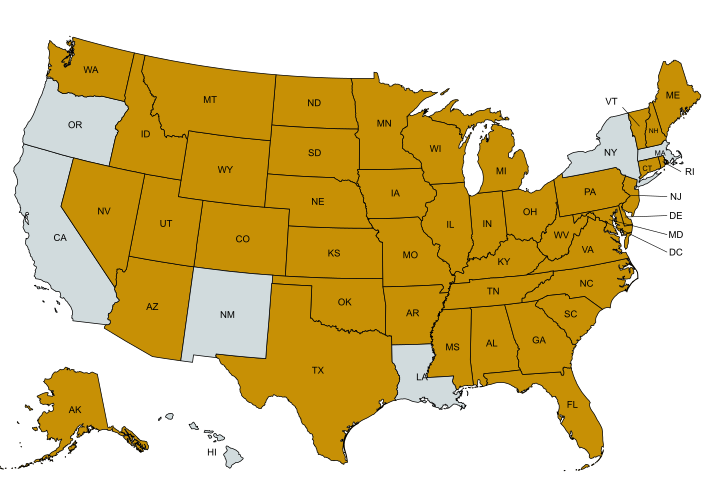
Online therapy, sometimes called teletherapy or virtual therapy, is the same reflective and depth-oriented work that happens in our offices, carried over a secure video connection instead. For many people it is not a compromise but a good fit: meeting from home or a private office removes a layer of logistics without changing what matters. We offer online therapy for individuals and couples in English, Italian, Spanish, and Mandarin. We see clients throughout Illinois and, through PSYPACT (an agreement among participating states that lets psychologists work across state lines), in many other U.S. states.
What the setting changes is mostly practical. The relationship, the attention to what someone brings, and the capacity to go deep do not depend on being in the same room. A private space, a reliable connection, and a few minutes to settle in before the first session are the main things to arrange.
What online therapy is like
To meet by video you need a device with a camera and microphone, a steady internet connection, and somewhere private enough to speak freely. We use a HIPAA-compliant platform, and your therapist sends the connection details before the first session. If the connection drops, we agree on a backup beforehand, so a session is never lost to technology.
Many people move between in-person and online over time, meeting in the Chicago or Evanston office when it is convenient, and by video when travel or a full week makes that easier. Online work suits most of what we do. For the few situations where being in the room genuinely matters, we will say so directly rather than let the format get in the way.
Seeing a therapist in another state

A psychologist's license is tied to a state. For most of the profession's history that meant therapy ended at the state border. If you moved, or spent part of the year elsewhere, you started over with someone new. PSYPACT changes that. The Psychology Interjurisdictional Compact, established in 2019, is an agreement among participating states that lets a licensed psychologist work with clients located in other member states, by video, without holding a separate license in each one.
What matters is where you are physically located during a session, not where you live, where your employer is, or where your health insurance is issued. If you are in a participating state when you meet, a PSYPACT-authorized psychologist can work with you, wherever their own office happens to be. Several of us are credentialed to practice across state lines through PSYPACT, alongside our Illinois licenses. Because the list of participating states changes as legislatures act, the practical question is best answered directly. If you are outside Illinois and want to know whether we can work together, ask us, and we will confirm before anything begins.
Sometimes the right therapist is not nearby. Finding someone who speaks your first language, understands your cultural background, or has particular training can be hard in a smaller city or a state with fewer clinicians. Working across state lines widens that search. People who have moved for work or school, who split the year between two places, or who want to keep their therapist after a move are among those for whom it matters most. Our work spans anxiety, depression, life and career transitions, cross-cultural identity, grief, and relationships.
Therapists offering online therapy:





Common questions about online therapy and PSYPACT
Often, yes. If you are physically located in a PSYPACT participating state during your sessions, and you work with one of our PSYPACT-authorized psychologists, we can usually meet by video, with no Illinois address required. The simplest path is to tell us where you will be located and who you would like to see, and we will confirm before anything begins.
PSYPACT, the Psychology Interjurisdictional Compact, is an agreement among participating U.S. states that lets a licensed psychologist provide telepsychology to clients located in other member states, without holding a separate license in each one. It was developed by the Association of State and Provincial Psychology Boards and began authorizing interstate practice in 2021. It has since grown to more than forty states and jurisdictions.
For most concerns, the research points the same way. A 2021 meta-analysis of 56 studies found that video-delivered psychotherapy produced large improvements, comparable to in-person treatment and well ahead of no treatment (Fernandez et al., 2021, "Live psychotherapy by video versus in-person: A meta-analysis of efficacy and its relationship to types and targets of treatment," Clinical Psychology & Psychotherapy, 28(6)). A 2022 meta-analysis of randomized controlled trials reached the same conclusion specifically for depression (Giovanetti et al., 2022, "Teletherapy versus in-person psychotherapy for depression: A meta-analysis of randomized controlled trials," Telemedicine and e-Health, 28(8)). The factor these studies identify as mattering most — the working relationship between therapist and client — does not appear to depend on sharing a room. For the situations where in-person work is clearly better, we will say so.
These jurisdictions currently participate in PSYPACT. What matters is where you are physically located at the time of your session.
- Alabama
- Alaska
- Arizona
- Arkansas
- Colorado
- Connecticut
- Delaware
- District of Columbia
- Florida
- Georgia
- Idaho
- Illinois
- Indiana
- Iowa
- Kansas
- Kentucky
- Maine
- Maryland
- Michigan
- Minnesota
- Mississippi
- Missouri
- Montana
- Nebraska
- Nevada
- New Hampshire
- New Jersey
- North Carolina
- North Dakota
- Northern Mariana Islands
- Ohio
- Oklahoma
- Pennsylvania
- Rhode Island
- South Carolina
- South Dakota
- Tennessee
- Texas
- Utah
- Vermont
- Virginia
- Washington
- West Virginia
- Wisconsin
- Wyoming
If your state is not listed, it may be worth checking again later, since more states join over time. If you are not sure, ask us and we will confirm.
What matters is where you are physically located for each session. If you are traveling within Illinois or another participating state, sessions can continue without interruption. If you will be in a state that does not participate, or outside the country, it is best to raise it beforehand so we can plan around it. When in doubt, ask before the session.
In most cases, yes. Many plans cover video sessions at the same rate as in-person ones. Coverage still varies by plan and state, and out-of-network rules differ, so it is worth confirming with your insurer before you begin. Our Getting Started page lists the specific questions to ask, including whether telehealth is covered at the same rate as in-person sessions. We are glad to help you think it through.
Ready to Connect?
Not sure where to start? We're here to help. You can review our therapist profiles and email a clinician directly, or contact us to schedule a free 15-minute consultation to help find the right fit.